
CDFAM Barcelona is just two weeks away. Over the past few days we’ve published three interviews with speakers whose work touches on just part of the range of what the program covers: from GPU-accelerated structural optimization to AI-native simulation platforms to autonomous MEP design for construction.
Each interview is worth reading on its own. Together, they give a glimpse of what April 8 and 9 is going to look like.
Nico Haag — PhysicsX
From Surrogates to Large Physics Models: Making AI-Native Engineering Work in Production
PhysicsX has roots in Formula One, the engineering problems they have taken on since, across aerospace, automotive, energy, and semiconductors, are not trivial, and the platform they’ve built to address them is worth understanding.
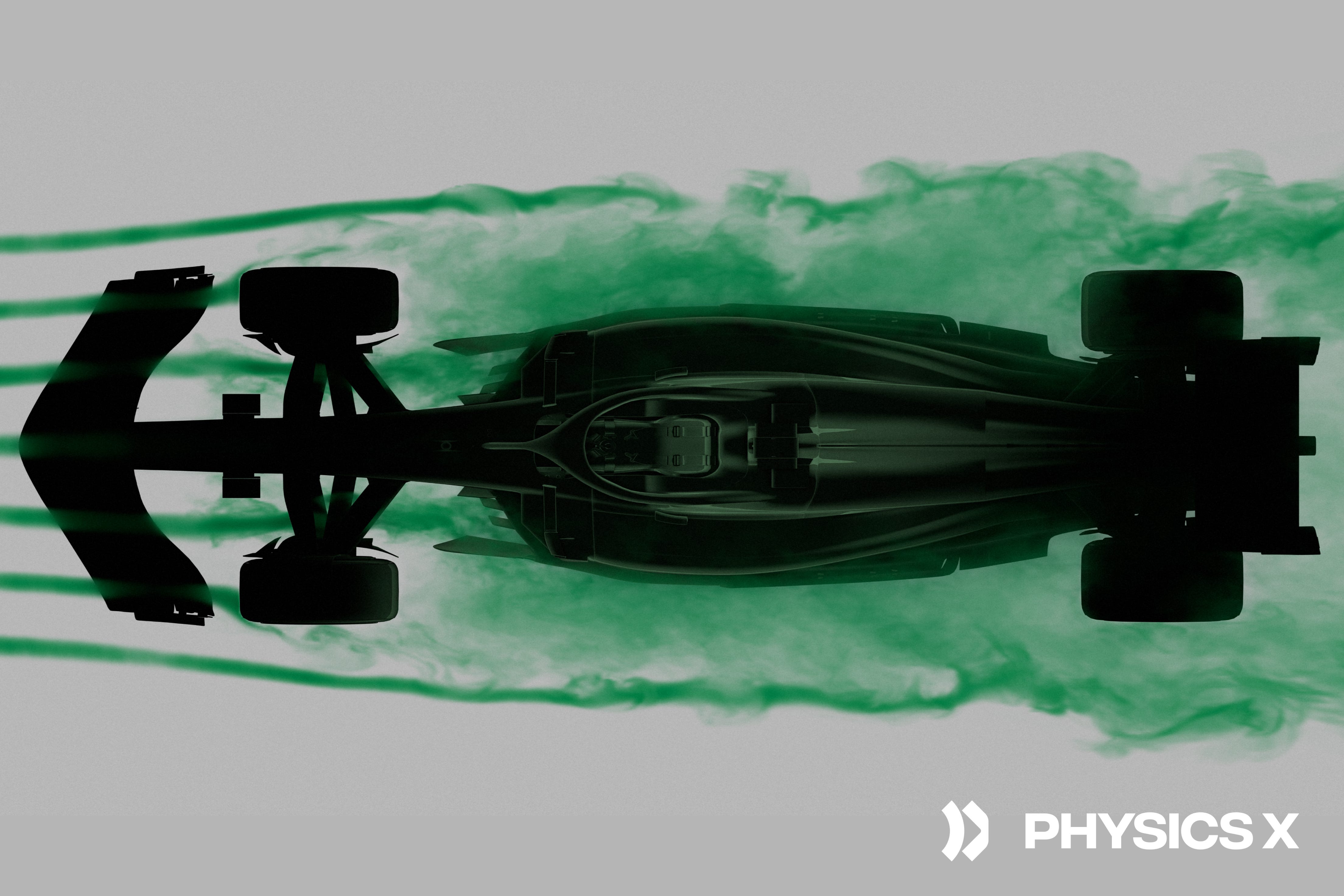
The interview with Nico covers the transition from traditional surrogate modeling to reusable physics intelligence, what the data pipeline for training aerodynamic models actually looks like, and how Large Physics Models are deployed in production rather than staged in a research environment.
His position on the human-in-the-loop question is direct: physics AI expands what engineers can do; it does not remove them from the process.
Hao (Richard) Zhang — Augmenta
Augmenta is working toward something that sounds straightforward until you look at what it actually requires: fully engineered, construction-ready 3D buildings generated from high-level inputs, with MEP systems that are geometrically valid, code-compliant, and buildable from day one.
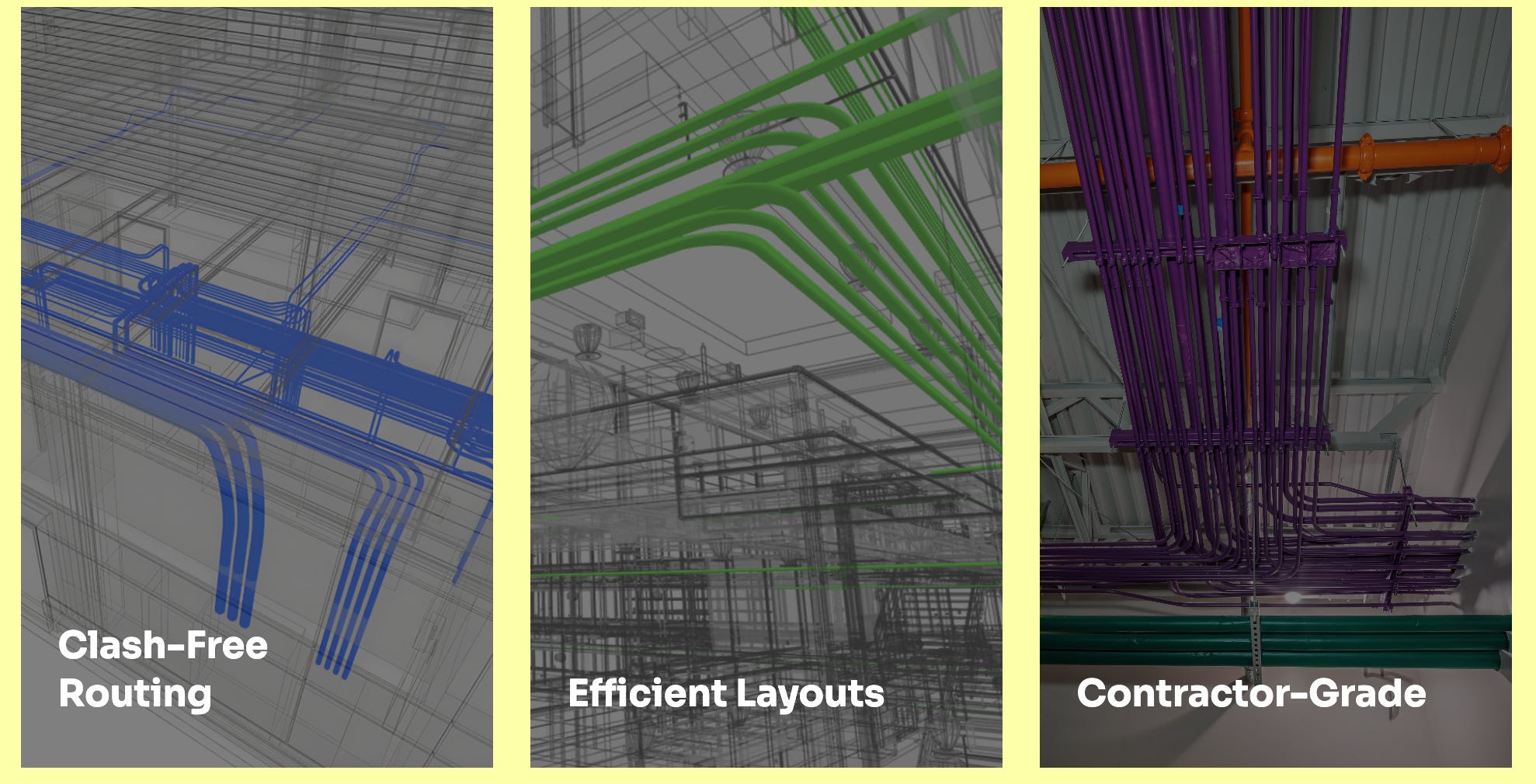
Richard’s interview introduces a useful distinction between spatial AI and functional AI. The former asks whether a design fits. The latter asks whether it works.
That difference in framing has significant downstream consequences for training objectives, data strategy, and what constitutes a valid output.
Raul C. Llamas-Sandin — Universidad Europea de Madrid & Airbus Operations SL
Unlocking Large-Scale Structural Synthesis: High-Performance GPU Topology Optimization
Raul’s research addresses stress-constrained topology optimization at scales that are actually relevant to structural engineering: models running to hundreds of millions of elements on a single consumer-grade GPU.
The method avoids structural sensitivities, which improves both speed and robustness, while an outer control loop maintains constraint fulfillment throughout.
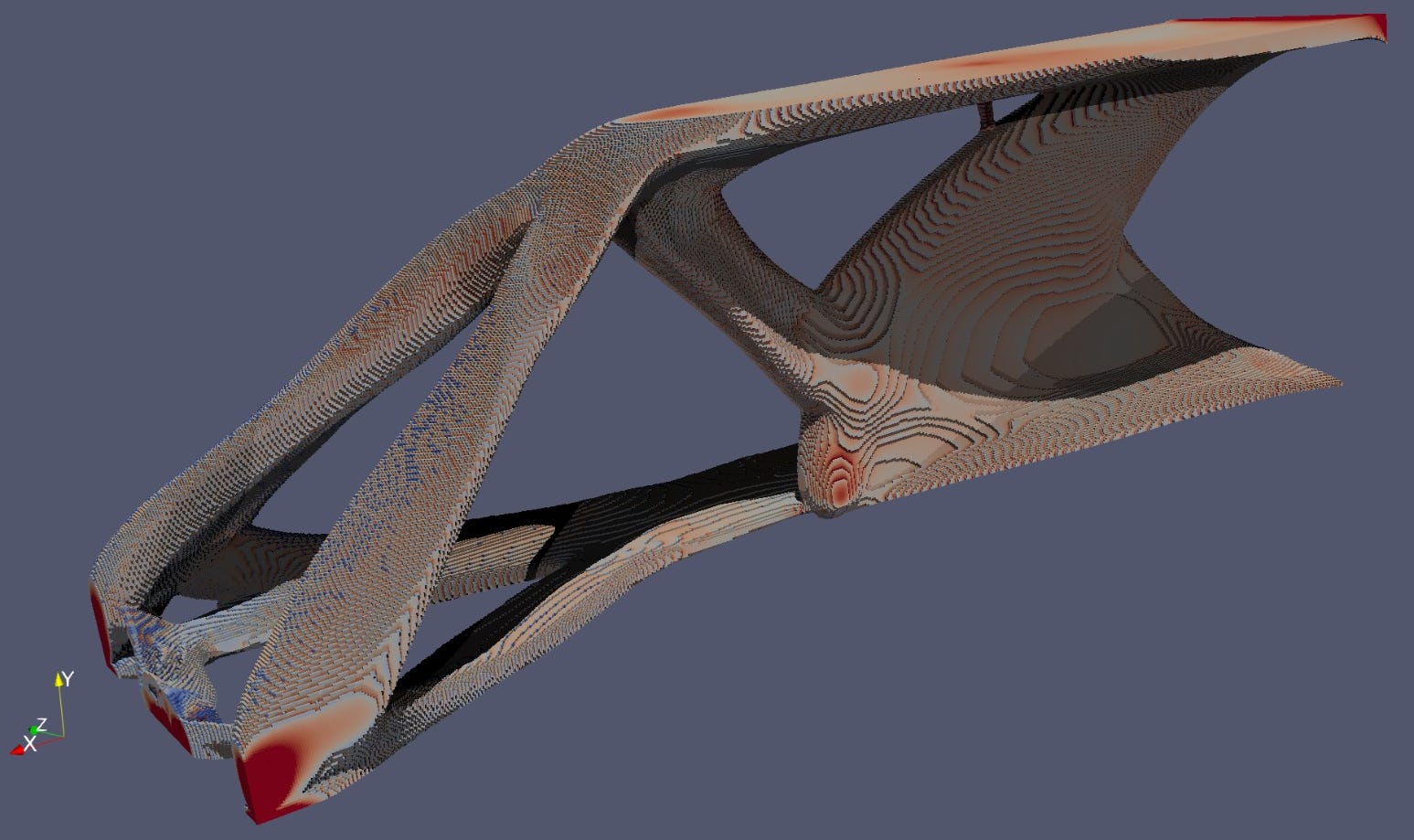
The interview covers multi-load configurations, mixed materials, self-weight, and tension-compression asymmetry.
He also speaks to the role of AI in accelerating code development and offers perspective from his parallel work in conceptual aircraft design at Airbus. It’s a grounded, technically specific conversation.

Join us in Barcelona
These three interviews represent a fraction of the program.
CDFAM Barcelona brings together practitioners and researchers across computational design, simulation, AI, and advanced manufacturing for two days of technical presentations industry gossip and tapas.
If you’ve been meaning to register, now is the time.
Register to attend — CDFAM Barcelona, April 8–9, 2026