CDFAM Computational Design Symposium — Tokyo 2026
This episode is the opening keynote from CDFAM Tokyo 2026, presented by Guido Cossu and Ivo Timóteo of Braid.
Braid was founded in Tokyo in 2020 by a team drawn from physics, applied mathematics, computational geometry, large-scale simulation and machine learning. At the time, the prevailing view in AI held that scaling end-to-end learning on ever-larger datasets would solve most problems. Braid took a different position: engineering design, where physical accuracy, safety and manufacturability are non-negotiable, requires reasoning from the laws of physics and the constraints of manufacturing rather than pattern-matching from prior examples.
Their system, AURA, combines learning with formal reasoning to move from engineering intent to manufacturable geometry, replacing the manual draw, simulate, review and redraw loop with structured exploration of alternatives that the engineer evaluates and selects from.
In this talk, Cossu and Timóteo explain the semantic architecture behind that approach and show results from deployments in Japanese manufacturing, across several mass-production processes with little in common.
The Best Design Is The Design You Can Make
Guido Cossu; Ivo Timóteo · Braid
Across computational design, the part that performs and the part that can be built are rarely the same part: optimization and generative methods meet the functional targets, and the work of making the result manufacturable happens afterward, by hand, often negating the performance that was gained. Braid closes that gap differently. Rather than optimizing a seed geometry or generating candidates from data, the system designs de novo — geometry reasoned directly from what an engineer specifies: function, physical conditions, the manufacturing process the part must suit, the cost it must meet.

The mechanism is semantic reasoning rather than data-driven generation: a semantic architecture encodes physics, geometry, and manufacturing constraints with their relationships, and enforces constraint satisfaction by construction. Because the manufacturing process is reasoned from rather than filtered for, the geometry is manufacturable from the first output, not repaired into manufacturability afterward.
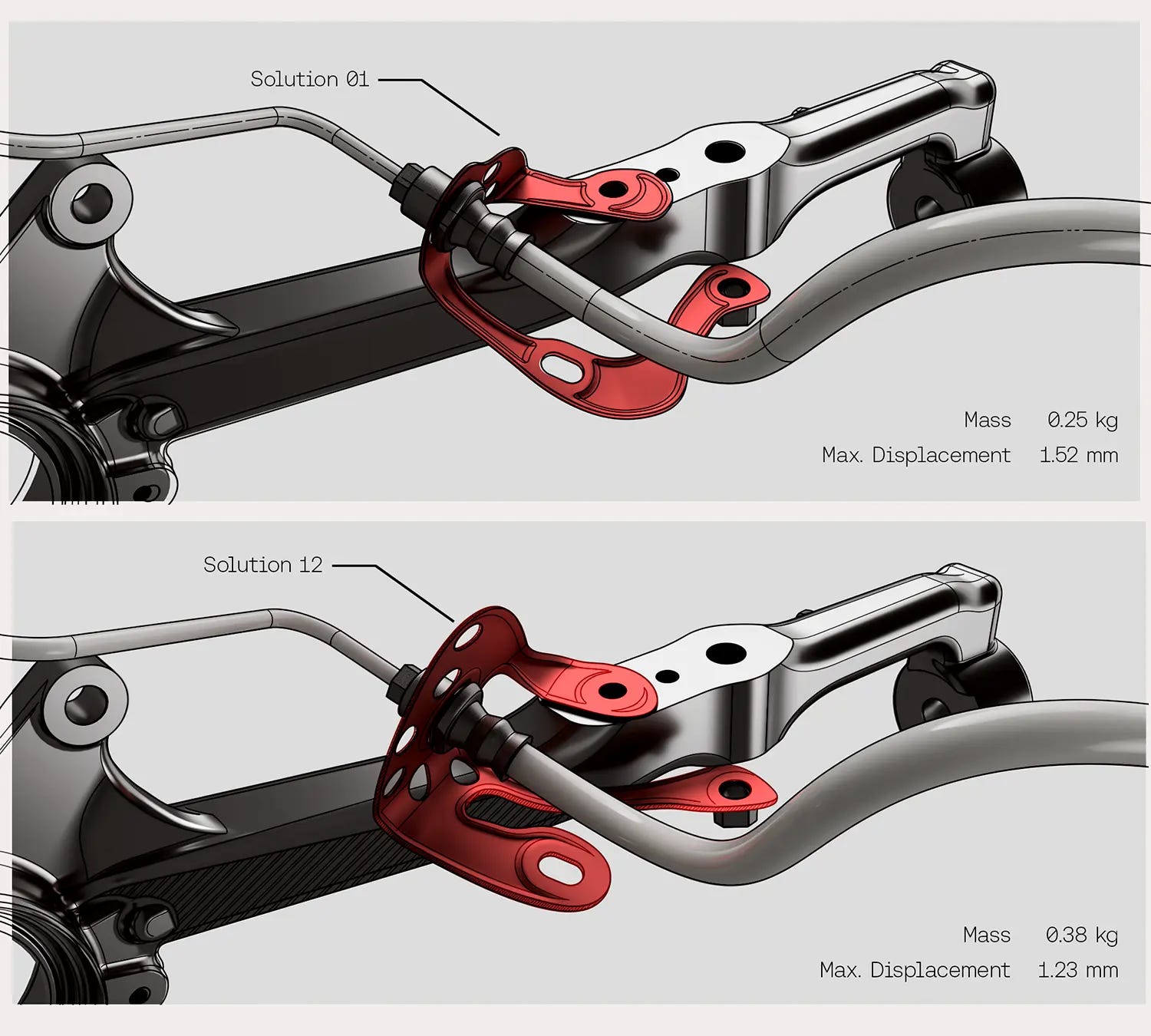
Braid demonstrate this on real engineering components across several conventional mass-manufacturing processes, each with its own design constraints. The examples come from deployments in Japanese manufacturing industries where tolerances are tight and errors are costly. One system handling processes with so little in common is the crucial point: each result is reasoned from principle, not retrieved from examples of similar parts — which is, in the end, the difference between a design system you can trust on a novel part and one you can only trust on a familiar one.