

There is a version of computational design that stops at geometry. It produces forms that look organic, patterns that feel complex, outputs that are visually coherent. But the logic underneath is shallow style applied through software rather than behaviour derived from constraints.
Yuan Mu’s work at Nike Innovation is something different.
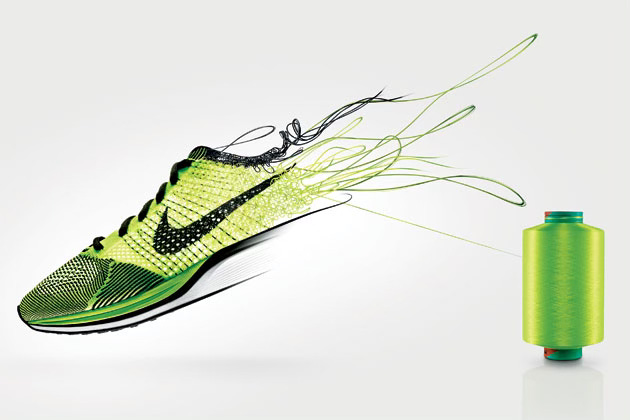
Her practice sits at the intersection of fabrication, material behavior, and design intent, not as separate concerns to be resolved in sequence, but as a single integrated system. Her background moves through animation, architecture, and textile engineering, and the through-line across all three is the same: understanding how things are made, and rebuilding that logic computationally.
In our interview ahead of her keynote at CDFAM Barcelona, Yuan talks about what it actually takes to close the gap between simulation and physical behavior, why the shift from analog to digital textile production is fundamentally about decoding craft rather than replacing it, and how end-to-end computational workflows change not just the process but the mentality of the people doing the work.
On the relationship between optimization and aesthetics:
“Most of the time, I’m careful not to rely on computational language as an automatic style. Instead, I embed additional layers of parameters into the system — not just geometric variables.
These parameters allow the form to evolve from constraints rather than from a preset visual language. When tuned intentionally, optimization doesn’t just improve performance; it refines the aesthetic.
The visual coherence emerges as a byproduct of logic — but it isn’t applied. It’s negotiated through the system.”
On the learning curve in additive and hybrid manufacturing:
“The learning curve in this field isn’t just about tools — it’s about understanding.
There’s a big difference between knowing and merely knowing of.
Today, software and workflows are more accessible than ever, but accessibility doesn’t automatically mean comprehension.”
On what end-to-end integration actually changes:
“That proximity to making changes your mentality. You become more invested, more curious, and more responsible.
The hands-on problem-solving mindset smooths the workflow. It does require lots of time and depth of knowledge, but I believe that shift toward integrated, end-to-end thinking is what will continue to transform the industry.”
These are not abstract observations. They reflect a specific, hard-won position on what computational design is actually for and what it demands from the people practicing it in a meaningful way.
Yuan will be presenting at CDFAM Barcelona on April 8-9, 2026.
Her keynote is a performance-oriented exploration of textile and apparel design: function-first and speculative, where computation is materially responsive rather than just visually applied.
Read the full interview here: Textile, Rewritten – Yuan Mu, Nike Innovation
Register to attend CDFAM Barcelona to connect with Yuan pushing the adoption of computational design, AI and machine learning in engineering and architecture.
