CDFAM Computational Design Symposium — Barcelona 2026
Maria Claudia Valverde Rojas · University of Stuttgart, IntCDC
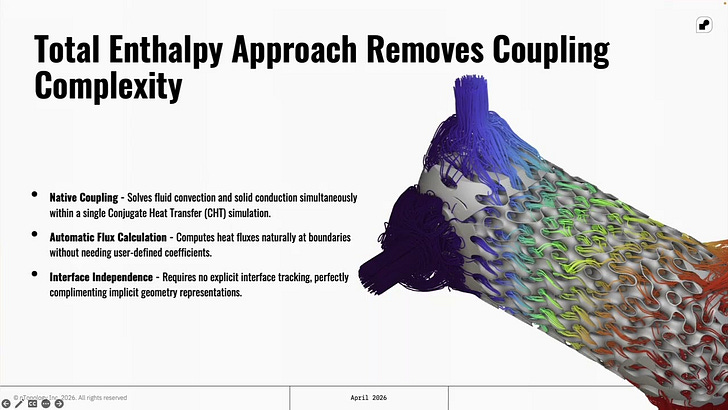
This presentation introduces a design and research framework that integrates geometry generation with real-world climatic and ecological data to support more-than-human thermal comfort in the exterior of building envelopes. Over the past two years, I have developed architected porous cellular structures, periodic and non-periodic, based on adaptive density minimal surfaces (ADMS) and triply periodic minimal surfaces (TPMS). These structures serve as protective envelopes for nesting tubes used by cavity-nesting wild bees. The novelty of this work lies not in the digital modelling itself, but in demonstrating how pore size and spatial gradients can be tuned to buffer heat threats inside nesting cavities, and how these porous morphologies behave under real outdoor conditions. Full-scale and small-scale prototypes were installed on real building settings, where they were exposed to solar radiation, diurnal temperature swings, summer heat events and varying humidity. Continuous monitoring revealed how these structures process and respond to environmental information, delaying heat peaks, modulating temperature transfer, and interacting with passive evaporative cooling strategies. In parallel, wild bee occupation of the prototypes provided biological feedback, confirming which geometries are perceived as suitable nesting habitats. Bringing together digital modelling, outdoor performance testing and ecological observation, this research proposes a design approach that situates building envelopes as active interfaces capable of supporting more-than-human thermal comfort in urban environments.
Links
Search the full text of every recorded CDFAM presentation