CDFAM Computational Design Symposium — Tokyo 2026
Darren Henry · PTC
The race toward AI-generated CAD has largely focused on teaching models to produce geometry directly—from B-reps and meshes to feature histories and sketches. But what if we’re teaching AI the wrong language?
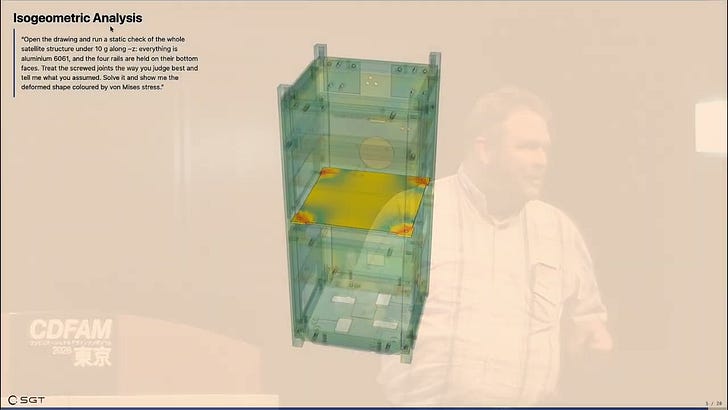
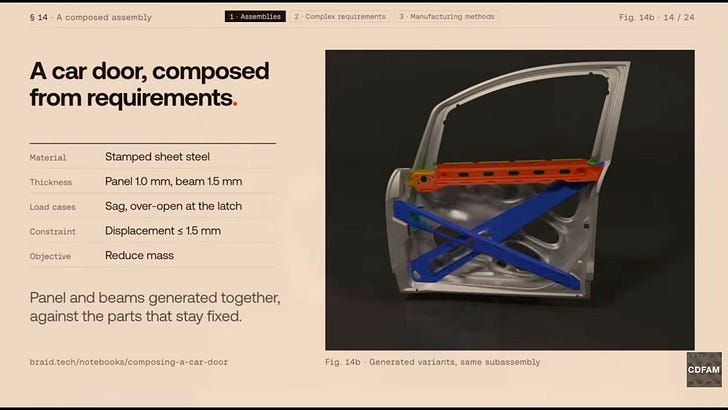
This presentation explores an alternative paradigm: Text-to-Code-to-CAD, where large language models generate engineering logic rather than geometry itself. Instead of predicting low-level geometric entities, AI writes executable CAD code that captures design intent, constraints, parameters, and engineering relationships. The result is not merely a finished model, but a native, editable, and reusable engineering feature that integrates naturally into the design workflow.
Using real-world examples, including AI-generated CAD features built through FeatureScript, this session demonstrates how modern language models can write, test, debug, and refine engineering code to create complex parametric designs while preserving the transparency and editability required for professional engineering. The discussion contrasts this approach with direct geometry generation and examines why engineering intent—not geometry—may be the more scalable representation for AI-assisted design.
Attendees will leave with a new perspective on computational design: the future may not be AI replacing CAD, but AI leveraging programming languages purpose-built for engineering to accelerate design while keeping engineers firmly in control.
Links
Talk page with full transcript